
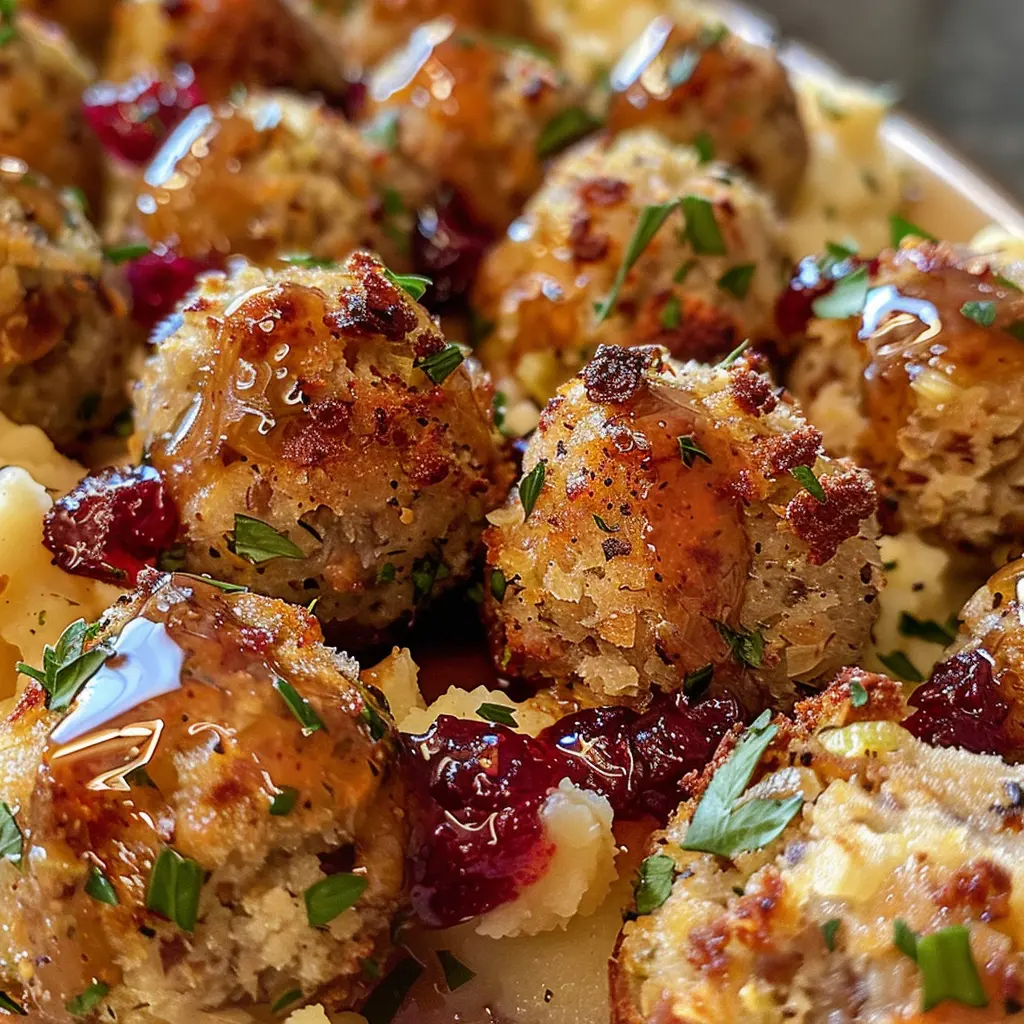
Thanksgiving leftover turkey and stuffing balls combine shredded turkey, mashed potatoes, stuffing, Parmesan, egg, and breadcrumbs into golden-baked spheres that somehow taste better than the original meal they came from. Everything that made the Thanksgiving table great is packed into a single bite, and the oven turns what would have been another plate of reheated leftovers into something that actually gets people excited about day two.
| Detail | Info |
|---|---|
| Prep Time | 15 minutes |
| Cook Time | 20 minutes |
| Total Time | 35 minutes |
| Servings | 4 to 6 (about 20 to 24 balls) |
| Difficulty | Easy |
| Cuisine | American |
Why This Recipe Works
Combining mashed potatoes and stuffing as the base of these balls rather than using either alone is what gives them their characteristic texture — dense enough to hold their shape when formed, tender enough to yield when bitten. Stuffing alone is too dry and crumbly to form into balls that hold together through baking. Mashed potatoes alone are too wet and sticky and don’t have the structural integrity to hold a ball shape. Together, the potato’s starchy moisture binds the drier stuffing and the stuffing’s bread-based structure gives the potato something to hold onto. The combination produces a mixture with exactly the right consistency for forming round, even balls that don’t fall apart on the baking sheet.
The egg in this recipe is the crucial binder that holds all five main components together during baking. When the raw egg is mixed into the combined potato, stuffing, turkey, cheese, and breadcrumb mixture, its proteins distribute evenly throughout. In the heat of the oven, those proteins coagulate and bind the surrounding ingredients into a cohesive structure, preventing the balls from crumbling apart as they bake. A mixture without egg can be formed into balls that look intact before baking but fall apart as they heat and the butter in the potatoes and stuffing begins to melt.
Parmesan cheese in the mixture does more than add flavor. Parmesan is a hard, aged cheese with a low moisture content and a high concentration of proteins and umami compounds. When mixed into the stuffing ball base and baked, the Parmesan melts slightly and its proteins contribute to the structural cohesion of the mixture alongside the egg. It also adds the salty, nutty, savory depth that distinguishes these balls from simply reheated leftover components — the Parmesan rounds out the flavor of the turkey and stuffing and makes the whole mixture taste more deliberately seasoned.
Breadcrumbs on the exterior serve a different function from the breadcrumbs incorporated into the mixture. The breadcrumbs mixed in add body and texture to the base. The parchment-lined baking sheet and the oven’s dry heat work together with the exterior breadcrumbs — which come from the stuffing itself as the mixture dries on the surface — to create a lightly crisped exterior that contrasts with the tender interior. Without this surface drying effect, the balls would be uniformly soft and less satisfying texturally.
The 375 degree F oven temperature is calibrated to brown the exterior of the balls without drying out the interior over the 15 to 20 minute bake time. A hotter oven would over-brown the surface before the interior is heated through. A cooler oven wouldn’t develop the golden color that makes these balls look appealing and wouldn’t crisp the surface adequately. The moderate temperature is the sweet spot for even, attractive browning throughout.
Ingredients
| Ingredient | Quantity | Notes |
|---|---|---|
| Mashed potatoes | 2 cups | Cold leftover mashed potatoes; firm and easier to work with than freshly made |
| Stuffing | 2 cups | Leftover baked stuffing; any style works |
| Shredded turkey | 1 cup | White or dark meat; shred finely so it distributes evenly through the mixture |
| Parmesan cheese, grated | 1/2 cup | Freshly grated for the best flavor and binding contribution |
| Egg, beaten | 1 large | The primary binder; beaten before adding to ensure even distribution |
| Bread crumbs | 1/4 cup | Adds body to the mixture and helps control consistency |
| Salt | 1/4 teaspoon | Adjust based on how well-seasoned the leftover components already are |
| Black pepper | 1/8 teaspoon | A light seasoning since the stuffing typically carries its own herbs and spice |
| Gravy or cranberry sauce | For serving | Both are natural accompaniments that complement the Thanksgiving flavors |
Step-by-Step Instructions
Phase 1: Make the Mixture
- Preheat the oven to 375 degrees F. Line a baking sheet with parchment paper and set aside.
- In a large bowl, combine the mashed potatoes, stuffing, shredded turkey, Parmesan cheese, beaten egg, breadcrumbs, salt, and black pepper. Mix well until all the ingredients are evenly distributed throughout the mixture. The mixture should hold together when pressed in your palm — if it’s too wet to form balls, add another tablespoon of breadcrumbs. If it’s too dry and crumbly, add a tablespoon of gravy or broth to loosen it slightly.
- Taste the mixture and adjust seasoning. Keep in mind that leftover stuffing and mashed potatoes are already seasoned, so the dish may need very little additional salt.
Phase 2: Form and Bake
- Using your hands or a cookie scoop, form the mixture into 1-inch balls. Roll each ball firmly between your palms to compact it and smooth the surface — a tightly formed ball holds together better during baking than a loosely shaped one.
- Place the balls on the prepared baking sheet, spacing them about an inch apart to allow heat to circulate evenly around each one.
- Bake for 15 to 20 minutes until the balls are golden brown and heated through. They should feel set and firm rather than soft when pressed gently. If the tops are browning before the balls are heated through, reduce the oven temperature to 350 degrees F for the remaining baking time.
- Serve hot with warm gravy for dipping or cranberry sauce alongside.
Chef Tips for Perfect Results
Use cold leftover components. Cold mashed potatoes and cold stuffing are firmer and easier to work with than warm leftovers. Cold components produce a mixture that holds its shape more easily during the rolling step and maintains the ball shape more reliably on the baking sheet before the oven sets everything in place.
Roll firmly. The key to balls that hold together through baking is forming them tightly. A loosely packed ball has air pockets that expand during baking and can cause it to crack or fall apart. Roll each ball with firm, consistent pressure between your palms until it’s compact and smooth.
Adjust mixture consistency before forming. Different leftover components have different moisture contents — some stuffings are drier, some mashed potatoes are wetter. If the mixture sticks to your hands and won’t hold a ball shape, add breadcrumbs a tablespoon at a time until it firms up. If it’s too dry and crumbles, add a splash of gravy or broth.
Make them uniform in size. Balls of different sizes bake at different rates — smaller ones will over-brown before larger ones are heated through. A cookie scoop or an ice cream scoop produces the most consistent sizing. Aim for approximately golf ball-sized portions.
Serve with both sauces. Warm gravy and cranberry sauce are complementary rather than competing accompaniments — the gravy provides savory richness and the cranberry sauce provides sweet-tart acidity. Having both on the table lets people mix and match with each bite.
Common Mistakes to Avoid
Using warm leftover components. Warm mashed potatoes and stuffing are softer and stickier than cold, making the mixture difficult to work with and the balls harder to shape. Let leftovers cool completely in the refrigerator before making this recipe.
Not mixing thoroughly. Unevenly mixed balls have pockets of plain stuffing or potato without the binding egg and Parmesan, which can cause those areas to crumble during baking. Mix until all components are completely and evenly integrated.
Making the balls too large. Balls larger than one to one-and-a-half inches take significantly longer to heat through and can brown on the outside while the center is still cold. Keep them at the one-inch size the recipe specifies for reliable results within the baking window.
Skipping the parchment paper. The mixture contains potato starch and egg that can cause the balls to stick aggressively to an unlined baking sheet, making them difficult to remove without breaking. Parchment paper ensures clean release every time.
Not tasting the mixture before forming. The seasoning in leftover stuffing and mashed potatoes varies widely. Tasting before forming allows you to adjust salt and pepper to the specific leftovers being used rather than applying the recipe’s quantities blindly.
Variations and Substitutions
Add shredded cheddar: Mix half a cup of shredded cheddar into the mixture alongside the Parmesan. The cheddar melts within the balls during baking and creates pockets of stretchy, melted cheese that make each bite even more satisfying.
Crispy exterior: Roll the formed balls in additional breadcrumbs or panko before placing them on the baking sheet for a more pronounced, crunchier exterior crust. For maximum crispiness, spray lightly with cooking spray before baking.
Air fryer version: Air fry at 375 degrees F for 10 to 12 minutes, shaking the basket once halfway through, until golden brown. The air fryer produces a crispier exterior than the oven version in less time.
Use ham instead of turkey: Finely diced leftover ham works as a substitute for the turkey and produces a slightly smokier, saltier version. Reduce the additional salt accordingly since ham carries more sodium than turkey.
Serving Suggestions
Arrange on a serving platter with small bowls of warm turkey gravy and cranberry sauce alongside for dipping. For a post-Thanksgiving lunch, serve five or six balls per person with a simple green salad. As a party appetizer the day after Thanksgiving, they work beautifully as finger food — pick up with a toothpick, dip in gravy, eat in one bite. A small sprig of fresh thyme pressed into the top of each ball before baking adds a simple visual elegance for presentation.
Storage and Reheating
Refrigerator: Store in an airtight container for up to 3 days. They reheat well and maintain their shape.
Reheating: Reheat in a 350 degree F oven for 8 to 10 minutes until warmed through, or in an air fryer at 350 degrees F for 5 minutes to restore the crispy exterior. The microwave works but softens the exterior.
Freezer: Freeze baked and cooled balls on a baking sheet until solid, then transfer to a freezer bag for up to 2 months. Reheat directly from frozen in a 375 degree F oven for 15 to 18 minutes.
Nutritional Information
| Nutrient | Per Serving (approx. 4 balls) |
|---|---|
| Calories | 230 |
| Protein | 12g |
| Carbohydrates | 26g |
| Fat | 8g |
| Saturated Fat | 3g |
| Fiber | 2g |
| Sodium | 480mg |
Nutritional values are estimates and will vary significantly based on the specific leftover components used. Mashed potato and stuffing recipes vary widely in fat and sodium content.
FAQ
Can I make these with store-bought stuffing and mashed potatoes?
Yes. Prepared stuffing mix (cooked according to package directions and cooled) and instant or refrigerated mashed potatoes both work as substitutes if Thanksgiving leftovers aren’t available. The balls will taste slightly different from the homemade leftover version but are still delicious, and the recipe becomes a year-round option rather than a once-a-year leftover dish.
Can I make the mixture ahead and refrigerate overnight before baking?
Yes. Form the balls, place them on the parchment-lined baking sheet, cover loosely with plastic wrap, and refrigerate overnight. Bake directly from the refrigerator, adding 3 to 5 minutes to the bake time to account for the cold start.
Why are my balls falling apart during baking?
This is almost always a binding issue. The most common causes are: the egg wasn’t fully beaten before adding (uneven egg distribution means some areas are bound and others aren’t), the mixture was too wet and the balls were formed loosely, or the leftovers being used were unusually dry and there wasn’t enough moisture to activate the egg as a binder. Add an extra egg if the mixture seems very dry, and always roll balls firmly and compactly.
Can I use chicken instead of turkey?
Yes. Shredded rotisserie chicken is the most convenient substitute and works identically in the recipe. The flavor profile shifts slightly from the traditional Thanksgiving combination but the recipe produces the same golden, savory balls.
What’s the best dipping sauce if I don’t have gravy or cranberry?
A Dijon mustard aioli — mayo, Dijon, garlic, and lemon juice — complements the herby stuffing and turkey very well. A honey mustard dipping sauce also works. For a creamy option, a dollop of sour cream seasoned with chives and a pinch of salt is simple and very effective.
Conclusion
Thanksgiving leftover turkey and stuffing balls are the recipe that reframes the post-holiday refrigerator as an opportunity rather than an obligation. The combination of mashed potato, stuffing, turkey, and Parmesan baked into golden spheres produces something that’s genuinely better than any of the components reheated separately — a compact, flavorful bite that captures everything good about the holiday meal and makes it exciting again.