
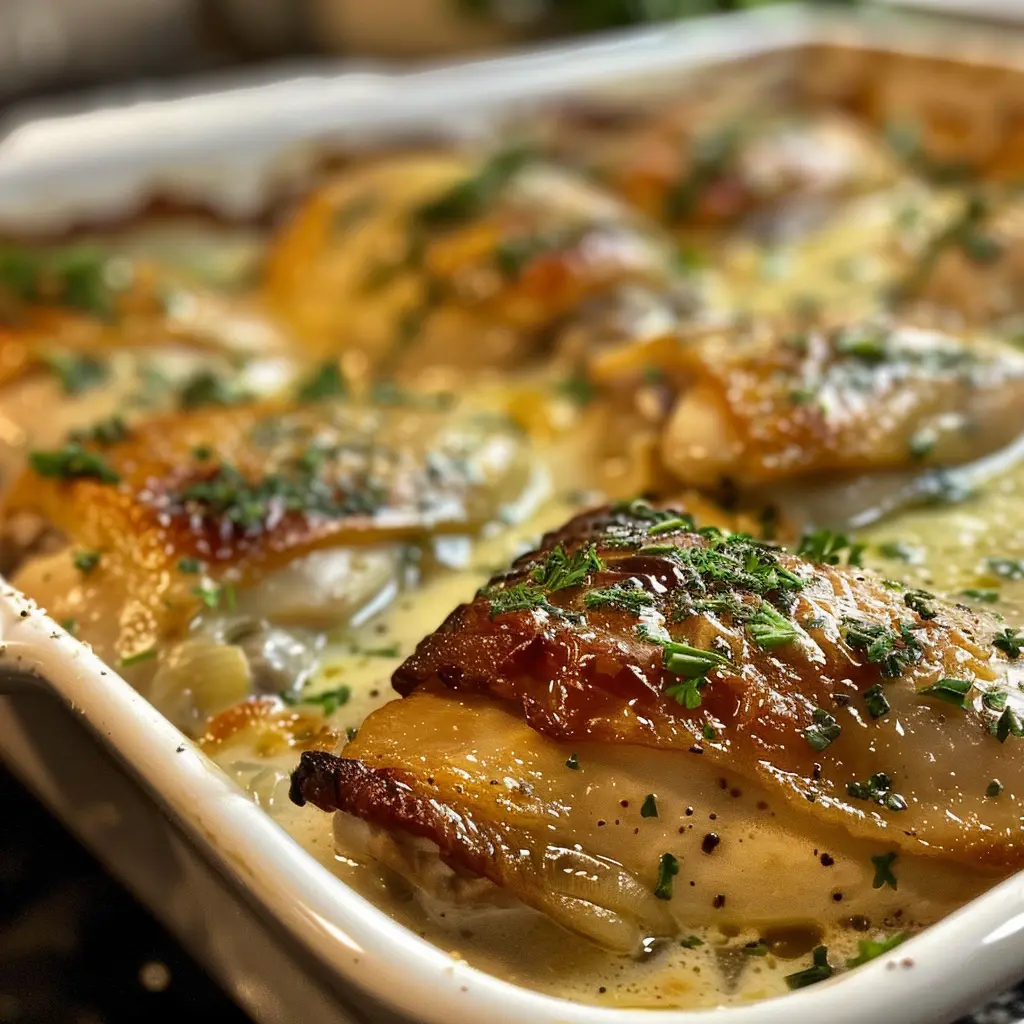
Cream of chicken and onion soup baked chicken thighs combine two pantry staples into a savory coating that transforms bone-in chicken thighs into something deeply sauced, fork-tender, and genuinely satisfying after less than an hour in the oven. Three ingredients, one pan, and the oven does all the work while the kitchen fills with the kind of smell that makes everyone ask when dinner will be ready.
| Detail | Info |
|---|---|
| Prep Time | 5 minutes |
| Cook Time | 55 minutes |
| Rest Time | 5 minutes |
| Total Time | 1 hour 5 minutes |
| Servings | 6 |
| Difficulty | Easy |
| Cuisine | American |
Why This Recipe Works
Bone-in, skin-on chicken thighs are the specific cut that makes this recipe work as well as it does, and the reason comes down to fat and structure. Chicken thighs have significantly more intramuscular fat than breasts, which means they stay moist and tender through the 45 to 55 minute oven time without drying out. The bone conducts heat from the inside while the oven heat works from the outside, producing more even cooking throughout the thick part of the thigh than a boneless cut would achieve. The skin renders its fat downward into the soup mixture during baking, enriching the sauce and basting the meat from above simultaneously.
Dry onion soup mix is a concentrated flavor delivery system that would take far longer to replicate from scratch. A single packet contains dehydrated onion, beef flavoring, salt, and umami-rich yeast extract in a ratio that, when combined with moisture, produces a deeply savory, onion-forward flavor that penetrates the cream of chicken soup base and elevates it well beyond what the canned soup produces alone. The salt in the mix seasons the chicken as it bakes, working into the meat through the sauce above it. The combination of two soup products in this recipe is a pantry shortcut that produces restaurant-quality depth of flavor with zero additional effort.
Mixing the cream of chicken soup and dry onion mix together before spooning it over the chicken rather than layering them separately produces a more cohesive, evenly flavored coating. The dry mix has the chance to fully dissolve and distribute through the cream soup, producing a unified sauce with consistent seasoning across every piece of chicken. Layering them separately would create hot spots of intense onion flavor from undissolved mix and blander areas where the plain cream soup rests.
Baking uncovered is the technique choice that produces the characteristic result of this dish: a thick, reduced, deeply caramelized sauce clinging to golden-edged chicken skin rather than a thin, pale, steamed result. An uncovered baking dish allows moisture to evaporate from the surface of the sauce, concentrating its flavors and developing a slightly caramelized quality at the edges and on the skin surface. This reduction and caramelization is responsible for the deep savory character that makes this dish taste far more involved than three ingredients mixed in a bowl suggests.
The resting period after baking serves two purposes in this recipe. It allows the chicken’s internal juices to redistribute through the meat rather than running out immediately when cut, producing more succulent individual servings. It also allows the thick sauce around the chicken to settle and thicken slightly from its oven-hot liquid state into a more cohesive, spoonable consistency — the difference between a sauce that slides off the plate and one that stays where it’s spooned.
Ingredients
| Ingredient | Quantity | Notes |
|---|---|---|
| Bone-in, skin-on chicken thighs | 6 | The bone and skin are essential to the tenderness and flavor of the finished dish |
| Dry onion soup mix | 1 packet | Standard 1-oz packet; Lipton is the most widely available brand |
| Cream of chicken soup | 1 can (10.5 oz) | Undiluted; combined with the onion mix to make the coating |
| Buttered egg noodles, mashed potatoes, or rice | For serving | All three are excellent vehicles for the sauce |
Step-by-Step Instructions
Phase 1: Prepare and Coat the Chicken
- Preheat the oven to 375 degrees F. Lightly grease a 9×13-inch baking dish or a baking dish large enough to hold all six thighs in a single layer without significant overlap.
- In a bowl, combine the undiluted cream of chicken soup and the dry onion soup mix. Stir well until the dry mix is fully dissolved and the sauce is smooth and uniform.
- Arrange the chicken thighs in a single layer in the prepared baking dish, skin side up. Spoon the soup mixture evenly over each thigh, coating the tops and sides generously. Use a spoon to push any sauce that falls between the pieces back onto the chicken.
Phase 2: Bake and Rest
- Bake uncovered for 45 to 55 minutes until the chicken is fully cooked through, the sauce is bubbling and slightly caramelized at the edges, and an instant-read thermometer inserted into the thickest part of the meat (not touching the bone) reads 165 degrees F.
- Remove from the oven and allow the chicken to rest in the baking dish for 5 minutes before serving.
- Spoon the sauce from the baking dish generously over each portion of chicken and serve with buttered egg noodles, mashed potatoes, or steamed rice.
Chef Tips for Perfect Results
Don’t dilute the cream of chicken soup. The recipe uses the soup straight from the can without adding water or milk. The concentrated, undiluted soup produces a thick, rich coating that reduces to a proper sauce consistency during the baking time. Diluted soup produces a thin, watery result that doesn’t cling to the chicken or develop the same depth of flavor.
Use a baking dish that fits the chicken snugly. A dish that’s too large spreads the sauce too thin across the pan bottom and it evaporates and scorches before the chicken is done. A dish sized for six thighs in a single layer keeps the sauce concentrated around the meat where it belongs and produces a thicker, more flavorful result.
Spoon the sauce back over the chicken halfway through baking. At the 25-minute mark, open the oven and spoon any sauce that has pooled in the dish back over the chicken. This basting step keeps the coating moist and distributed evenly across the skin surface, promoting even browning and caramelization across all six pieces.
Add a splash of chicken broth to the pan if the sauce seems too thick. Some brands of cream of chicken soup are thicker than others, and the sauce can reduce to a very thick, almost paste-like consistency in a hot oven. If the sauce looks like it’s getting too thick or beginning to stick before the chicken is cooked through, a quarter cup of chicken broth stirred into the pan loosens it and prevents burning.
Check the thickest thigh for doneness. In a batch of six chicken thighs, the largest piece will take the longest to reach 165 degrees F. Always check the thickest thigh rather than assuming uniformity across the batch — a thermometer reading from the thickest piece confirms safety without guesswork.
Common Mistakes to Avoid
Using boneless, skinless thighs or chicken breasts. This recipe is calibrated for bone-in, skin-on thighs specifically. Boneless, skinless thighs are done in significantly less time and risk drying out in the 45 to 55 minute window. Breasts are even leaner and will overcook badly. If only boneless, skinless thighs are available, reduce the baking time to 30 to 35 minutes and check for 165 degrees F early.
Baking covered. A foil cover traps steam that prevents the sauce from reducing and the skin from browning. The concentrated, caramelized sauce and golden skin that define this dish only develop in an uncovered baking environment.
Not mixing the soups thoroughly before applying. Undissolved lumps of dry onion mix sitting on top of the cream soup produce uneven seasoning — intensely salty, onion-heavy bites next to bland ones. Stir until the dry mix is completely dissolved and the sauce is smooth before it touches the chicken.
Skipping the rest period. Chicken cut or served immediately from the oven loses its internal juices onto the plate rather than retaining them in the meat. Five minutes of rest makes each thigh noticeably more succulent.
Not using a thermometer for doneness. Bone-in chicken that looks done on the outside can still be underdone near the bone. An instant-read thermometer at 165 degrees F is the only reliable confirmation of food safety for thick cuts with a bone.
Variations and Substitutions
Add sliced mushrooms: Scatter a cup of sliced mushrooms around the chicken before baking. They absorb the sauce and become deeply savory by the time the chicken is done, adding a meaty texture and earthy flavor to the pan.
Add sour cream to the sauce: Stir two tablespoons of sour cream into the soup mixture before applying it to the chicken. The sour cream adds a slight tanginess and makes the finished sauce even creamier and richer.
Cream of mushroom instead of cream of chicken: Substituting cream of mushroom soup produces an earthier, more savory flavor profile that pairs particularly well with the onion soup mix. The finished dish tastes closer to a stroganoff-style sauce.
Use chicken drumsticks: Bone-in drumsticks work identically in this recipe and often appeal to children who prefer them. Adjust the baking time to 40 to 45 minutes and check for 165 degrees F in the thickest part.
Serving Suggestions
Buttered egg noodles are the classic accompaniment that absorbs the sauce most effectively — the thick, eggy noodles hold the creamy onion sauce in their curves and produce the most satisfying plate. Mashed potatoes are equally excellent for the same reason. Steamed white rice works for a lighter base. Serve with a simple green vegetable — steamed broccoli, green beans, or peas — alongside to complete the plate with some color and freshness.
Storage and Reheating
Refrigerator: Store in an airtight container for up to 4 days. The sauce continues to develop flavor overnight and the dish often tastes even better the next day.
Reheating: Cover with foil and reheat in a 325 degree F oven for 20 minutes until heated through. The microwave works for individual portions in 60-second intervals, though the skin loses its texture with microwave reheating.
Freezer: Freeze in an airtight container for up to 3 months. Thaw overnight in the refrigerator and reheat in the oven covered with foil.
Nutritional Information
| Nutrient | Per Serving (approx., without sides) |
|---|---|
| Calories | 380 |
| Protein | 32g |
| Carbohydrates | 8g |
| Fat | 24g |
| Saturated Fat | 7g |
| Fiber | 0g |
| Sodium | 940mg |
Nutritional values are estimates based on standard ingredient brands. Sodium content is significant due to both soup products; use a low-sodium cream of chicken soup to reduce it if desired.
FAQ
Can I make this in a slow cooker instead of the oven?
Yes. Place the chicken thighs in the slow cooker, mix the soups and pour over the top, and cook on LOW for 6 to 7 hours or HIGH for 3 to 4 hours until the chicken reaches 165 degrees F and is very tender. The slow cooker version produces a more saucy, braised result rather than the caramelized, oven-roasted character of the baked version — both are delicious but different in texture and appearance.
Can I use chicken breasts instead of thighs?
Breasts can be used but require careful timing. Boneless, skinless breasts cook through in 25 to 30 minutes at 375 degrees F — far less than the thigh recipe specifies. Bone-in breasts take closer to 35 to 40 minutes. Check for 165 degrees F at the thickest point and remove immediately when it’s reached. The result will be less rich and less forgiving of overcooking than thighs.
Can I add vegetables to the baking dish?
Yes. Diced potatoes, halved baby carrots, and sliced onion all work well placed around the chicken before baking. They absorb the sauce and become very flavorful by the end of the cook time. Cut root vegetables into roughly equal pieces for even cooking within the baking window.
Is this recipe too salty?
The combination of dry onion soup mix and cream of chicken soup does produce a notably salty dish. Using a low-sodium cream of chicken soup reduces the total sodium significantly. Some versions of the dry onion soup mix are also available in reduced-sodium formulations. Taste the sauce before it goes on the chicken and adjust if needed with an extra tablespoon of unsalted cream or water to dilute.
How do I know the chicken is done without a thermometer?
Pierce the thickest part of the thigh near the bone with a knife — the juices that run out should be completely clear with no pink tinge. The meat should feel firm rather than soft and yielding when pressed. That said, a thermometer reading of 165 degrees F is the only way to be completely certain and is strongly recommended for bone-in chicken, where visual checks are less reliable than with boneless cuts.
Conclusion
Cream of chicken and onion soup baked chicken thighs is the recipe that proves pantry staples, used correctly, can produce something genuinely craveable. Three ingredients, five minutes of prep, one hour in the oven, and the result is a fork-tender chicken in a thick, savory sauce that tastes like it took considerably more intention to make. Serve it over egg noodles or mashed potatoes and it becomes one of the most reliable, consistently satisfying dinners in any home cook’s repertoire.