
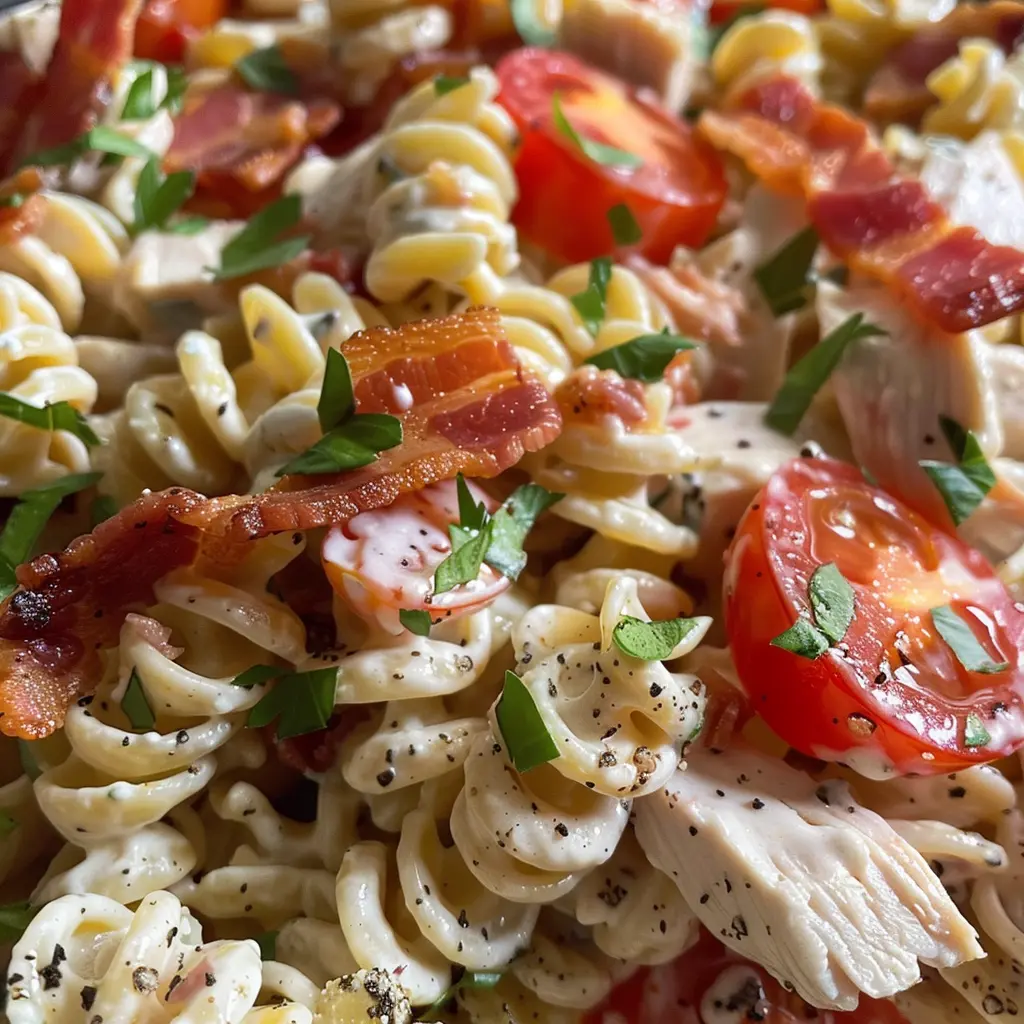
Chicken bacon ranch pasta salad combines rotisserie chicken, crispy thick-cut bacon, spiral pasta, shredded zucchini, fresh tomato, and sharp cheddar in a homemade ranch dressing built from a seasoning packet, mayonnaise, and buttermilk. It takes 20 minutes to assemble, an hour in the refrigerator to come together, and arrives at a picnic, potluck, or weeknight table as one of those pasta salads people keep coming back to until the bowl is empty.
| Detail | Info |
|---|---|
| Prep Time | 20 minutes |
| Chill Time | 1 hour minimum |
| Total Time | 1 hour 20 minutes |
| Servings | 6 to 8 |
| Difficulty | Easy |
| Cuisine | American |
Why This Recipe Works
Spiral pasta — rotini or fusilli — is the shape that makes this pasta salad work better than any other pasta format would. The tight spiral shape creates dozens of small channels and curves along every piece of pasta, and those channels trap and hold the creamy ranch dressing so that every forkful delivers dressing with every bite rather than dressing that has slid off smooth pasta and pooled at the bottom of the bowl. Spiral pasta also has a higher surface area than smooth short pasta shapes, which means it absorbs more dressing during the chill period and carries more flavor per piece into the finished salad. The shape isn’t incidental — it’s the structural feature that makes this salad as well-dressed as it is.
Rinsing the cooked pasta with cold water immediately after draining serves two purposes that both matter for the finished salad. First, it stops the cooking process, preventing the pasta from continuing to soften from residual heat and becoming overcooked and mushy by the time the salad is assembled. Second, it removes the surface starch that accumulates on pasta during cooking — that starch causes pasta pieces to stick together in a clump as they cool and also causes the dressing to thicken and turn gummy where it contacts the starchy surface. Cold-rinsed pasta stays separate, coats evenly with dressing, and produces a salad with a cleaner, less starchy mouthfeel.
Shredded zucchini rather than diced or sliced zucchini is the preparation choice that integrates the vegetable into the salad rather than leaving it as a distinct, separate component. Diced zucchini pieces in a pasta salad are visually present but texturally separate — you notice them as vegetables. Shredded zucchini, at about two cups, disperses through the salad in thin strands that interweave with the pasta, chicken, and dressing, adding moisture, mild flavor, and a barely-there vegetable presence that most people encounter as part of the salad’s overall texture rather than as distinct vegetable pieces. It also adds volume without making the salad heavier, which is the balance a make-ahead salad needs to stay satisfying rather than dense.
Buttermilk in the homemade ranch dressing produces a tangier, more complex dressing than one made with regular milk or sour cream. Buttermilk’s lactic acid is what gives ranch dressing its characteristic tangy background note — the sharpness that makes it taste like more than just seasoned mayonnaise. It also thins the mayonnaise to a pourable, coating consistency without diluting the flavor the way water or milk would. The buttermilk’s acidity also acts as a mild tenderizer during the chill period, softening the chicken pieces slightly and helping the dressing penetrate the pasta rather than just coating the exterior.
Rotisserie chicken is the most practical and often the most flavorful chicken option for a cold pasta salad. Rotisserie chicken has been cooked with salt and seasoning and is already at the exact tender, moist texture ideal for pasta salad — there’s no risk of dry, overcooked chicken that comes with cooking chicken breasts at home specifically for a cold dish. The skin-on roasting method keeps rotisserie chicken moist even after refrigeration, where plain poached or baked chicken tends to dry out. Three cups of chopped rotisserie chicken represents roughly half of a standard store-bought bird, making this recipe a natural companion to any meal where the other half of a rotisserie chicken is being used.
Ingredients
Salad
| Ingredient | Quantity | Notes |
|---|---|---|
| Rotisserie chicken, chopped | 3 cups | About half a standard rotisserie chicken; white and dark meat both work |
| Thick-cut bacon, cooked and crumbled | 6 slices | Cook until genuinely crispy; thick-cut stays crunchier in the dressing |
| Spiral pasta (rotini or fusilli) | 12 oz | Cooked al dente, drained, rinsed cold, and fully cooled before dressing |
| Zucchini, shredded | 1 medium (about 2 cups) | Shredded on a box grater; no need to salt and drain for this application |
| Tomato, chopped | 1 large, or 1 cup cherry tomatoes halved | Cherry tomatoes hold up better in the refrigerator and release less juice |
| Sharp cheddar cheese, shredded | 1 cup | Sharp for the most pronounced cheese flavor against the ranch dressing |
Homemade Ranch Dressing
| Ingredient | Quantity | Notes |
|---|---|---|
| Ranch seasoning mix | 1 packet | Hidden Valley or equivalent; the herbal and tangy flavor base |
| Mayonnaise | 1 cup | Full-fat for the richest, most coating dressing |
| Buttermilk | 3/4 cup | Provides tang and thins the dressing to a pourable consistency |
| Black pepper | 1/4 teaspoon | Adds mild heat alongside the ranch seasoning |
| Paprika | 1/4 teaspoon | Adds subtle warmth and color to the dressing |
| Garlic powder | 1/4 teaspoon | Amplifies the garlic note already in the ranch packet |
Step-by-Step Instructions
Phase 1: Cook and Cool the Pasta
- Cook the spiral pasta in a large pot of generously salted boiling water until al dente — slightly firmer than fully cooked. It will soften slightly more during the chill period as it absorbs dressing. Drain, rinse thoroughly with cold water until the pasta is completely cool to the touch, and set aside in the colander to drain fully.
Phase 2: Make the Ranch Dressing
- In a small bowl, whisk together the ranch seasoning packet, mayonnaise, buttermilk, black pepper, paprika, and garlic powder until completely smooth. Taste and adjust — the dressing should be tangy, herby, and slightly thick. It will thin slightly during the chill period as it absorbs moisture from the vegetables.
Phase 3: Assemble and Chill
- In a large bowl, combine the cooled pasta, chopped rotisserie chicken, crumbled bacon, shredded zucchini, tomato, and shredded cheddar cheese. Toss gently to distribute everything evenly.
- Pour the ranch dressing over the salad and toss until every component is evenly coated. The dressing should coat generously — this salad absorbs dressing during the chill period and is better slightly over-dressed at this stage than under-dressed.
- Cover and refrigerate for at least 1 hour before serving. Two hours produces an even better result — the pasta absorbs the dressing’s flavor, the bacon softens slightly and becomes part of the salad rather than sitting on top, and the ranch seasoning blooms fully in the cold.
- Stir thoroughly before serving and taste for seasoning — the salad may need a pinch of salt or a splash more buttermilk if it has thickened during refrigeration. Serve chilled.
Chef Tips for Perfect Results
Use cherry tomatoes instead of a sliced tomato. A chopped large tomato releases significant juice during the chill period that can water down the dressing and make the salad watery at the bottom of the bowl. Cherry tomatoes halved release far less liquid and hold their shape through the refrigerator time, producing a cleaner, better-textured salad. If using a large tomato, add it just before serving rather than during the initial assembly.
Reserve some dressing to add before serving. Pasta salad absorbs dressing during refrigeration and can look underdressed when it comes out of the refrigerator. Setting aside a quarter cup of the dressing to stir in just before serving ensures the salad looks and tastes as well-dressed as it did when freshly assembled. If the salad looks dry after the chill period, the reserved dressing is the fix.
Cook the bacon until crispier than you’d normally prefer. Bacon softens in the dressing during refrigeration. Bacon cooked to the point of being slightly too crispy to eat on its own will be at perfect crispiness after an hour in the dressed salad. Bacon that’s only moderately crispy before going in will be soft and chewy by serving time.
Let the pasta cool completely before dressing. Warm pasta added to the dressing partially cooks the mayonnaise and causes the dressing to break into a greasy, separated coating rather than a smooth, creamy one. Always cool the pasta fully — room temperature is the minimum; cold from the rinse is better.
Make it up to 24 hours ahead. This pasta salad is at its best after several hours of refrigeration and holds well for up to 24 hours. It’s the ideal potluck or meal-prep dish because it genuinely improves with time rather than just tolerating it.
Common Mistakes to Avoid
Not rinsing the pasta. Unrinsed pasta clumps together, coats unevenly with dressing, and produces a starchy, gluey mouthfeel. Always rinse with cold water until the pasta is cool and the water runs clear.
Under-dressing at assembly. It’s tempting to use less dressing to keep the salad lighter, but pasta absorbs dressing during the chill and a salad that looks well-dressed when assembled will look dry an hour later. Dress generously and reserve some dressing for serving.
Using regular milk instead of buttermilk. Regular milk produces a thinner dressing with less tang that doesn’t replicate the characteristic buttermilk ranch flavor. If buttermilk isn’t available, add a tablespoon of white vinegar or lemon juice to three-quarters cup of regular milk, stir, and let sit for 5 minutes before using — a quick buttermilk substitute that produces a close result.
Adding the tomatoes too early for a long chill. Tomatoes release juice over time that dilutes the dressing. For salads chilling more than 2 hours, add the tomatoes in the last 30 minutes before serving or use cherry tomatoes which release significantly less juice.
Serving without stirring. Dressing settles to the bottom during refrigeration. A thorough stir before serving redistributes the dressing and brings the salad back to its evenly coated state. Always stir before plating.
Variations and Substitutions
Add avocado: Diced avocado stirred in just before serving adds creaminess and richness that pairs naturally with the ranch dressing and bacon. Add at the last minute — avocado doesn’t hold well through refrigeration and will discolor if added during assembly.
Add corn: A cup of thawed frozen corn or drained canned corn adds sweetness and color that works very naturally in a ranch-dressed pasta salad. Ranch and corn are a particularly harmonious pairing.
Use Greek yogurt for the dressing: Replace half the mayonnaise with full-fat Greek yogurt for a lighter, tangier dressing with more protein. The yogurt version has a slightly thinner consistency and a sharper tang but is equally satisfying as the full-mayo version.
Add diced red onion: A quarter cup of finely diced red onion adds a sharp, bright bite that contrasts with the richness of the ranch dressing and the cheddar. Soak the diced onion in cold water for 10 minutes before adding to mellow its sharpness if preferred.
Serving Suggestions
Serve chilled directly from the refrigerator, stirred thoroughly and tasted for seasoning. This pasta salad travels well in a covered container and holds its temperature at a cookout or picnic for about two hours before the mayonnaise-based dressing needs to be kept cold. For a potluck, serve in the mixing bowl with tongs or a large spoon. Extra crumbled bacon and shredded cheddar scattered over the top before serving makes the finished dish look more impressive and signals its best flavors to anyone approaching the table.
Storage
Refrigerator: Store covered for up to 3 days. The salad continues to absorb dressing over time — stir before each serving and add a splash of buttermilk or a spoonful of mayonnaise if it seems dry. The bacon will soften further over days two and three.
Freezer: Not recommended. Mayonnaise-based dressings separate and become grainy after freezing and thawing, and the pasta texture degrades significantly.
Nutritional Information
| Nutrient | Per Serving (approx., based on 7 servings) |
|---|---|
| Calories | 580 |
| Protein | 32g |
| Carbohydrates | 38g |
| Fat | 34g |
| Saturated Fat | 9g |
| Fiber | 2g |
| Sodium | 720mg |
Nutritional values are estimates based on standard ingredient brands with full-fat mayonnaise. Values will vary based on specific ranch packet, cheese, and rotisserie chicken brands used.
FAQ
Can I use bottled ranch dressing instead of making my own?
Yes. Use about one and a quarter cups of your preferred bottled ranch dressing in place of the homemade version. The homemade dressing has a fresher, more customizable flavor and a slightly thicker consistency that coats the pasta better than most bottled versions, but a good quality bottled ranch produces a very satisfying result with even less prep. Hidden Valley’s bottled ranch is the natural pairing for a recipe using their dry seasoning packet.
Can I make this without buttermilk?
Yes. The quickest substitute is three-quarters cup of regular whole milk with a tablespoon of white vinegar or lemon juice stirred in, left to sit for 5 minutes until it curdles slightly. This produces a close approximation of buttermilk’s tang and acidity. Plain Greek yogurt thinned with a little milk to a pourable consistency is another good substitute that adds extra protein to the dressing.
How far ahead can I make this?
Up to 24 hours ahead is ideal. The salad is genuinely better after several hours of refrigeration than immediately after assembly. Beyond 24 hours, the pasta continues to absorb dressing and can become dry, the tomatoes release more juice and can water the dressing down, and the bacon loses most of its texture. Make it the night before or the morning of the event for the best result.
Can I use a different pasta shape?
Yes, though spiral shapes produce the best result for the reason covered in the recipe notes — their channels trap and hold the dressing. Penne, farfalle, and cavatappi are good alternatives. Avoid smooth shapes like elbow macaroni or orzo, which hold dressing less effectively, and long pasta like spaghetti or linguine, which doesn’t distribute well through a tossed salad.
What can I substitute for the rotisserie chicken?
Any cooked, seasoned chicken works. Grilled chicken breasts chopped into bite-sized pieces, poached chicken thighs, or canned chicken (well drained) all work as substitutes. Season any home-cooked chicken with salt and garlic powder before adding to the salad — the rotisserie chicken’s built-in seasoning is part of its value in this recipe and plain poached chicken can taste flat in comparison.
Conclusion
Chicken bacon ranch pasta salad is the recipe that earns its reputation at every potluck and cookout it attends — it’s the bowl that gets requests for the recipe, that disappears before other dishes at the table, and that tastes better the second time it’s made because every variable is already dialed in. Make it the night before, stir it once before serving, and let the combination of rotisserie chicken, crispy bacon, homemade ranch, and spiral pasta do everything the recipe promises.