
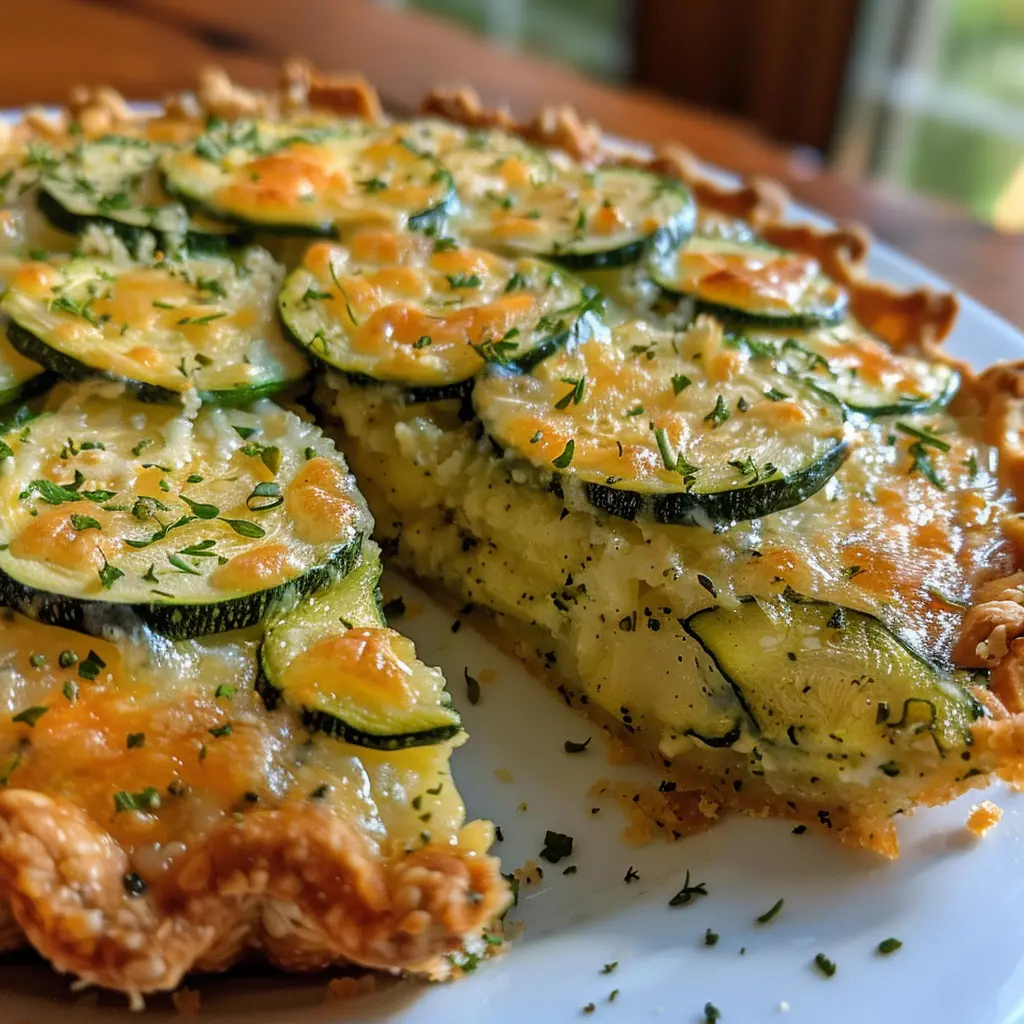
Bisquick zucchini pie stirs a seasoned egg-and-oil batter together with cheddar, Parmesan, yellow onion, green onion, and sliced zucchini, pours it into a pie plate, and bakes it into something that’s simultaneously a pie, a quiche, and a casserole in the best possible way — golden at the edges, tender in the center, and more flavorful than anything this straightforward has any right to be. It’s the recipe that makes zucchini the star of the table rather than the vegetable everyone politely avoids.
| Detail | Info |
|---|---|
| Prep Time | 15 minutes |
| Bake Time | 45 to 50 minutes |
| Total Time | 1 hour 5 minutes |
| Servings | 6 to 8 |
| Difficulty | Easy |
| Cuisine | American |
Why This Recipe Works
Bisquick mix is the ingredient that makes this pie self-structuring without any pastry crust. Bisquick contains flour, leavening, salt, and fat in ratios calibrated specifically to produce a light, slightly biscuit-like baked texture when combined with wet ingredients. When mixed into an egg-and-oil batter with the zucchini and cheese, it creates a matrix that sets around the vegetables during baking and produces a pie that holds together when sliced — not a quiche (which relies purely on egg custard), not a casserole (which lacks the lift), but something with qualities of both. The Bisquick leavening also creates a slight rise at the edges that produces the characteristic golden, slightly puffy border that makes this pie look as satisfying as it tastes.
Vegetable oil rather than butter or milk as the primary fat in the batter produces a moister, more tender crumb that stays soft even after the full 45 to 50 minute bake. Butter in a batter like this tends to produce a crisper, drier texture that can become tough at the edges where it bakes longest. Oil coats the flour proteins in the Bisquick more evenly than butter, producing a more uniformly tender result throughout the pie from center to edge. The half cup of oil is also part of what keeps the baked pie from drying out as it cools — oil-based baked goods hold their moisture better than butter-based ones at room temperature.
Thyme is the herb choice that defines the savory character of this pie. Where parsley and onion powder provide background notes, thyme’s slightly woody, almost floral earthiness is distinctive enough to register as the pie’s primary herbal identity. Thyme pairs specifically well with both zucchini and Parmesan — it’s the herb that appears in French gratins of summer squash and in Italian preparations of zucchini for exactly this reason. The combination of thyme, garlic powder, and onion powder in the dry mix produces a seasoning profile that reads as savory and herbal without being identifiable as any single cuisine, which is part of what makes this pie so broadly appealing.
The two-cheese combination — cheddar and Parmesan — produces a baked pie with layers of cheese flavor rather than a single flat note. Cheddar melts into the batter during baking and becomes distributed throughout the interior, adding creamy, slightly sharp flavor to every bite of the pie’s interior. Parmesan, with its lower moisture and higher salt content, contributes a sharper, nuttier note and holds more distinct through the bake rather than fully melting into the batter. The two tablespoons of Parmesan reserved for the top develops an even more concentrated, slightly browned flavor as it bakes uncovered in the final stage, producing a noticeably different — more intensely savory — character on the surface than the Parmesan integrated throughout.
The two-stage bake — covered for 30 minutes, then uncovered for 15 to 20 — solves the challenge of cooking a zucchini-loaded pie without either undercooking the center or drying out the edges. The covered stage traps steam from the zucchini as it releases moisture during baking, which keeps the interior moist and helps the zucchini slices cook through without the outer edges of the pie overbrowning. The uncovered stage allows the surface moisture to evaporate, the Parmesan on top to toast and develop color, and the edges to achieve the golden brown that signals a properly baked pie. Neither stage alone produces both results simultaneously.
Ingredients
| Ingredient | Quantity | Notes |
|---|---|---|
| Bisquick mix | 1 cup | The structural base; provides flour, leavening, and fat for the batter |
| Garlic powder | 1 teaspoon | Mixed into the dry ingredients |
| Onion powder | 1/2 teaspoon | Adds background onion depth alongside the fresh onions |
| Dried thyme | 1 teaspoon | The primary herbal note in the pie’s flavor profile |
| Dried parsley | 1/2 teaspoon | Adds mild herbal freshness to the dry mix |
| Salt | 1/2 teaspoon | The cheeses and Bisquick carry salt; taste before adding more |
| Black pepper | 1/4 teaspoon | Freshly cracked preferred |
| Eggs | 4 large | Whisked with the oil; the primary binding structure of the batter |
| Vegetable oil | 1/2 cup | Produces a moist, tender crumb; do not substitute butter |
| Cheddar cheese, shredded | 1 cup | Sharp cheddar for the most pronounced flavor; mixed into the batter |
| Parmesan cheese, grated | 1/2 cup plus 2 tablespoons | 1/2 cup into the batter; 2 tablespoons reserved for the top |
| Zucchini, thinly sliced | 1.5 cups | Thin slices cook through evenly; some arranged decoratively on top |
| Yellow onion, chopped | 1/2 cup | Mixed into the batter; softens and sweetens during baking |
| Green onion, chopped | 1 | Added to the batter; provides a milder, fresher onion note |
Step-by-Step Instructions
Phase 1: Mix the Batter
- Preheat the oven to 350 degrees F. Coat the inside of a 9-inch pie plate thoroughly with nonstick cooking spray, including the rim.
- In a large bowl, combine the Bisquick mix, garlic powder, onion powder, dried thyme, dried parsley, salt, and black pepper. Stir to distribute the seasonings evenly through the dry mix.
- In a separate bowl, whisk together the 4 eggs and vegetable oil until fully combined and uniform.
- Pour the wet ingredients into the dry ingredients and stir until just combined — a few small lumps are fine. Do not overmix.
- Add the shredded cheddar, the half cup of Parmesan, the chopped yellow onion, and the green onion. Stir to incorporate evenly.
- Add the sliced zucchini and stir gently until all the slices are coated in the batter and not sticking together. Reserve a small handful of the most attractive zucchini slices for the decorative top layer.
Phase 2: Fill and Top
- Pour the zucchini batter into the prepared pie plate and smooth the surface with a spatula. Arrange the reserved zucchini slices in a pleasing pattern across the top — overlapping circles or a fanned arrangement both look attractive and signal what’s inside.
- Sprinkle the reserved 2 tablespoons of Parmesan evenly over the top.
Phase 3: Bake
- Cover the pie plate tightly with aluminum foil. Bake covered for 30 minutes.
- Remove the foil and continue baking uncovered for 15 to 20 minutes until the edges are golden brown, the top is set and lightly golden, and a toothpick inserted into the center comes out clean with no wet batter.
- Let cool for 10 minutes before slicing. The pie needs this rest to firm from its hot, slightly fluid state into a sliceable wedge that holds together cleanly.
Chef Tips for Perfect Results
Slice the zucchini consistently thin. Zucchini slices that are too thick may not cook completely through in the covered bake stage, leaving firm, undercooked pieces in the finished pie. Aim for slices about an eighth of an inch thick — thin enough to bend slightly when held. A mandoline produces the most consistent slices with the least effort, though a sharp knife and care produces equally good results.
Don’t skip the 10-minute rest before slicing. The batter around the zucchini is still very soft and fluid immediately from the oven. The rest period is when it firms into the cohesive, sliceable texture that makes this pie so satisfying to serve. Cutting immediately produces ragged, collapsing slices that fall apart on the plate. After 10 minutes, it cuts cleanly into wedges that hold their shape.
Arrange the top zucchini layer with intention. The decorative top layer is the first thing people see and the detail that makes this pie look genuinely impressive rather than just something poured into a dish. Overlapping thin zucchini rounds in concentric circles, or layering them in a fan pattern from center to edge, takes 60 seconds and produces a pie that looks like it came from a bakery rather than a home kitchen.
Use sharp cheddar for maximum flavor contrast. The mild, tender zucchini benefits from a cheddar with genuine sharpness that provides contrast and makes the cheese flavor register clearly against the vegetable and herb background. Mild cheddar disappears into the batter; sharp cheddar punctuates it.
Check for doneness with a toothpick, not the clock. Zucchini water content varies by season, size, and freshness and affects how long the pie needs to bake. Always test the center with a toothpick — clean means done; wet batter means it needs more time. Add 5-minute increments after the initial uncovered window if needed.
Common Mistakes to Avoid
Overmixing the batter after adding the wet ingredients. Overworked Bisquick batter develops gluten and produces a tough, dense pie rather than a light, tender one. Stir until just combined and stop — lumps in the batter are not a problem.
Cutting before the full rest period. Ten minutes is the minimum. A pie cut at five minutes will lose its structure and slide apart. If you can wait fifteen minutes, the slices will be even cleaner and more cohesive.
Using very large or watery zucchini. Very large, mature zucchini have a higher water content and larger seeds that can make the pie wetter and less cohesive than younger, smaller zucchini. If only large zucchini is available, scrape out the seedy center before slicing to reduce excess moisture.
Not greasing the pie plate thoroughly. The egg-and-oil batter can stick firmly to the pie plate if the coating is insufficient, making clean slices difficult to remove. Coat every surface of the pie plate including the inside of the rim before adding the batter.
Baking uncovered the full time. A pie baked without the covered stage loses too much moisture from the zucchini too quickly and can produce dry, overbaked edges before the center is cooked through. The covered first stage is not optional.
Variations and Substitutions
Add diced bell pepper: Half a cup of finely diced red or yellow bell pepper stirred into the batter alongside the onions adds sweetness, color, and a slightly different texture that makes each slice more visually interesting.
Add crumbled bacon or sausage: Half a cup of cooked, crumbled bacon or breakfast sausage folded into the batter before the zucchini transforms this from a vegetarian dish into a hearty all-in-one breakfast or brunch pie. The smoked, savory meat pairs naturally with the thyme and Parmesan.
Substitute yellow squash: Yellow summer squash works identically to zucchini in this recipe and can be used in equal quantities, alone or combined with zucchini for a two-color top layer that looks particularly attractive.
Add sun-dried tomatoes: Two tablespoons of oil-packed sun-dried tomatoes, drained and roughly chopped, stirred into the batter adds a concentrated tomato tang that pairs naturally with the Parmesan and thyme for a more distinctly Italian-inspired flavor profile.
Serving Suggestions
Let the pie cool for 10 minutes, then slice into 6 to 8 wedges with a sharp knife. Serve warm as a side dish alongside grilled chicken or fish, or as a light lunch or brunch main with a green salad. A dollop of sour cream or a drizzle of hot sauce alongside makes a nice accompaniment. This pie also serves well at room temperature, which makes it an excellent option for potlucks, picnics, or make-ahead meals.
Storage and Reheating
Refrigerator: Store covered for up to 4 days. The pie holds its structure well and slices cleanly even after refrigeration.
Reheating: Individual slices reheat well in the microwave in 45 to 60 second intervals. For a better result that restores some of the original texture, place slices on a baking sheet and warm in a 325 degree F oven for 10 to 12 minutes.
Freezer: Freeze individual slices wrapped tightly in plastic and foil for up to 2 months. Thaw overnight in the refrigerator and reheat in the oven. The texture softens slightly after freezing but the flavor remains excellent.
Nutritional Information
| Nutrient | Per Serving (approx.) |
|---|---|
| Calories | 313 |
| Protein | 11g |
| Carbohydrates | 14g |
| Fat | 25g |
| Saturated Fat | 7g |
| Fiber | 1g |
| Sodium | 480mg |
Nutritional values are estimates based on standard ingredient brands. Values will vary based on specific cheese brands and zucchini size used.
FAQ
Can I make this without Bisquick?
Yes. Replace the Bisquick with a homemade equivalent: one cup of all-purpose flour combined with one and a half teaspoons of baking powder, half a teaspoon of salt, and one tablespoon of vegetable oil. The result is functionally identical in the finished pie — Bisquick is essentially a pre-mixed version of these pantry staples.
Do I need to salt and drain the zucchini first?
For this recipe, no. The covered bake stage manages the moisture the zucchini releases, and the Bisquick batter is robust enough to absorb it without becoming soggy. Salting and draining is necessary for applications where excess zucchini moisture would directly waterlog a filling — in this pie, the batter structure handles it. Skip the extra step.
Can I use frozen zucchini?
Not recommended for the top decorative layer, where fresh slices are important for presentation. For the batter itself, thawed and thoroughly drained frozen zucchini can be chopped and folded in, though the texture will be softer than fresh. The pie will be less visually distinctive but equally flavorful.
Can I make this in a square baking dish instead of a pie plate?
Yes. An 8×8 or 9×9 square baking dish works well and produces a pie that’s cut into squares rather than wedges. The bake time is the same. A rectangular 9×13 dish produces a thinner pie that will bake faster — reduce the covered bake to 20 minutes and check for doneness at 10 minutes uncovered.
How do I know if the center is done without a toothpick?
Gently press the center of the pie with your fingertip — a done pie feels firm and springs back slightly rather than feeling soft, jiggly, or leaving an indentation. The edges will be clearly golden and set; the center should look matte rather than wet or shiny on the surface. When in doubt, use a toothpick or a thin knife inserted into the center and withdrawn — clean means done.
Conclusion
Bisquick zucchini pie is the recipe that converts zucchini skeptics and earns recipe requests from people who assumed they already knew everything worth knowing about summer squash. The Bisquick batter creates a structure that’s more interesting than a quiche and more elegant than a casserole, the two-cheese and thyme seasoning makes every bite more flavorful than the vegetable-forward ingredient list suggests, and the decorated top makes it look like something that took considerably more effort than 15 minutes of mixing actually requires. Serve it warm, serve it at room temperature, bring it to a potluck — it holds up beautifully in every context.