
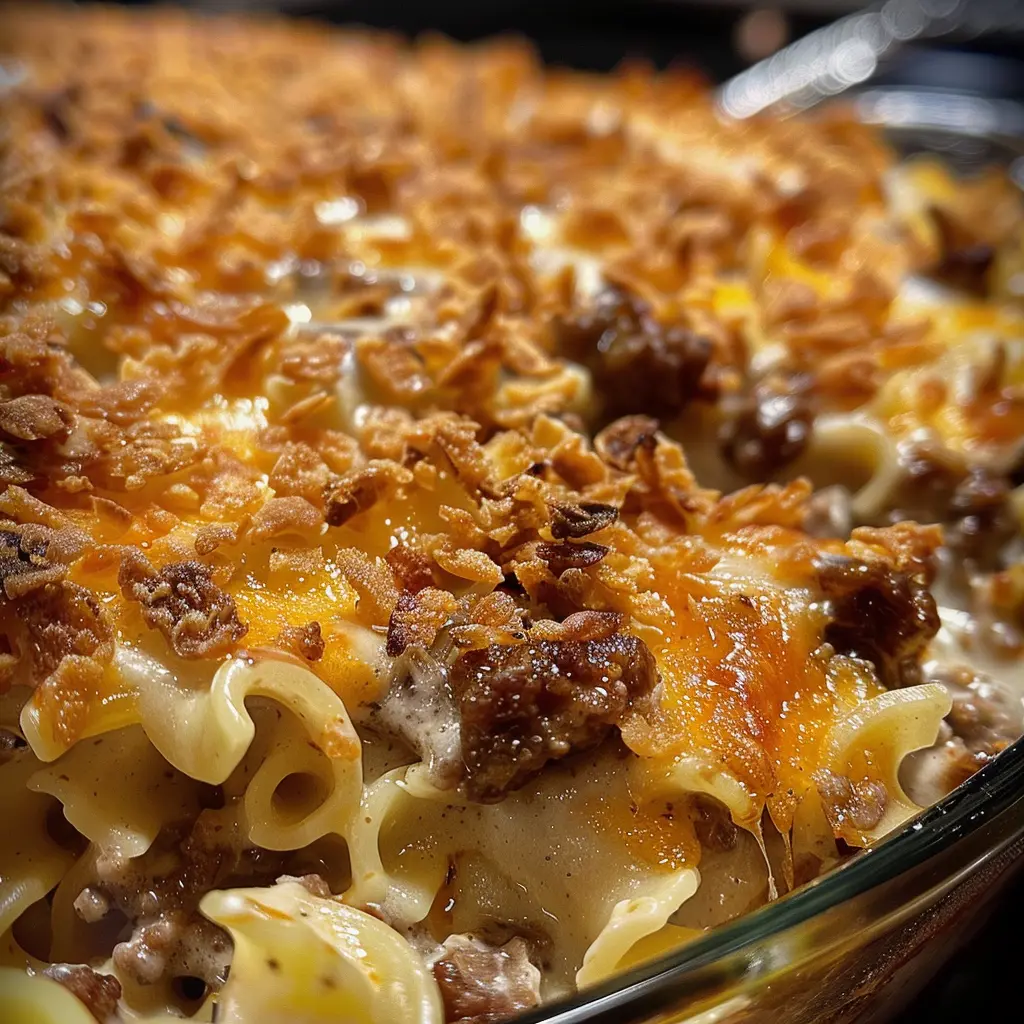
Cheesy beef and noodle casserole with crispy French onions combines seasoned ground beef and egg noodles in a creamy cheddar and sour cream sauce built on cream of mushroom soup and Worcestershire, bakes it until hot and bubbling, then covers the top with French-fried onions for the final five to seven minutes until they’re golden and shatteringly crisp. The result is a deeply savory, creamy casserole with a crunch on top that makes every serving more satisfying than plain cheesy casseroles that stop at melted cheese.
| Detail | Info |
|---|---|
| Prep Time | 20 minutes |
| Bake Time | 25 to 32 minutes |
| Total Time | 50 to 55 minutes |
| Servings | 6 to 8 |
| Difficulty | Easy |
| Cuisine | American |
Why This Recipe Works
Adding the French-fried onions only in the final five to seven minutes of baking rather than at the start is the technique decision that determines whether the topping is crispy or soggy. French-fried onions placed on a casserole at the beginning of a 25-minute bake absorb moisture from the steam rising through the casserole below them and become soft and damp — the opposite of their intended function. Added in the last five to seven minutes, they sit on the surface of an already-baked, mostly set casserole where steam production has significantly reduced, and they bake in the dry oven heat long enough to toast and crisp without any moisture exposure. Timing is everything with this topping.
Worcestershire sauce in the beef and sauce mixture is the ingredient that does the most quiet work in this casserole. A teaspoon of Worcestershire brings fermented, umami-forward depth to the ground beef that seasoning with salt and pepper alone can’t produce. It contains tamarind, anchovies, and molasses that together create a complex, slightly sweet-and-savory background note that makes the beef taste more deeply seasoned and the cream sauce taste richer. It’s the kind of ingredient whose absence is more noticeable than its presence — the casserole without it tastes slightly flat; with it, the flavor has a depth that’s hard to identify specifically but unmistakably satisfying.
Sour cream and cream of mushroom soup together produce a sauce with more complexity and a better texture than either would provide alone. Cream of mushroom soup alone produces a reliable, thick sauce with an earthier mushroom flavor but a slightly processed, one-note quality. Sour cream alone would produce a tangy, thin sauce that doesn’t have enough body to coat the noodles and beef through the bake. Combined in the proportions this recipe uses — one cup of sour cream to one can of undiluted soup — the sour cream adds tang, richness, and a dairy creaminess that elevates the soup’s flavor, while the soup’s starch and seasoning gives the sauce its body and savory depth. The combination tastes homemade in a way that condensed soup alone never quite achieves.
Egg noodles absorb the cream sauce during the bake more readily than any other pasta shape, which is why they appear in casseroles of this type so consistently. Their egg-enriched dough is more porous than semolina pasta and draws the surrounding sauce into the noodle itself rather than just coating the exterior. After 20 to 25 minutes in the oven, egg noodles baked in this sauce have absorbed enough of the surrounding cream and cheese to taste deeply seasoned and integrated with the filling rather than like plain pasta that happens to be coated in sauce. The wide, flat shape also provides more surface area for the sauce to cling to than most other short pasta shapes.
Baking the casserole uncovered for the full bake time before the French onions go on allows the cheese and sauce to set to the right consistency and for the top surface to develop a slight skin that can support the weight of the onion topping. A covered bake would produce a wetter, softer surface that the onions would sink into rather than sitting on top of. The uncovered bake also allows some of the moisture in the sauce to evaporate, concentrating the flavor and producing a thick, scoopable casserole rather than a soupy one.
Ingredients
| Ingredient | Quantity | Notes |
|---|---|---|
| Egg noodles | 12 oz | Wide egg noodles; cooked al dente before combining |
| Ground beef | 1 pound | 80/20 for flavor; drain well after browning |
| Small onion, finely diced | 1 | Cooked with the beef until soft and translucent |
| Garlic cloves, minced | 2 | Added after the beef and onion; cooked 1 minute |
| Cream of mushroom soup | 1 can (10.5 oz) | Undiluted; the sauce base and thickener |
| Sour cream | 1 cup | Full-fat; adds tang and dairy richness to the sauce |
| Milk | 1/2 cup | Thins the sauce to a coatable, spreadable consistency |
| Cheddar cheese, shredded | 2 cups, divided | 1.5 cups into the casserole mixture; 0.5 cup over the top before first bake |
| Worcestershire sauce | 1 teaspoon | Adds umami depth to the beef and sauce |
| Salt and black pepper | To taste | Season after tasting — the soup and cheese carry significant salt |
| French-fried onions | 1 can (6 oz) | Added only in the final 5 to 7 minutes; added early = soggy topping |
| Parsley or chives, chopped | Optional | Scattered over just before serving for color |
Step-by-Step Instructions
Phase 1: Cook the Noodles and Beef
- Preheat the oven to 350 degrees F. Grease a 9×13-inch baking dish and set aside.
- Cook the egg noodles in a large pot of salted boiling water until al dente — slightly firmer than fully cooked, since they will finish in the oven. Drain and set aside.
- In a large skillet over medium heat, cook the ground beef and diced onion together, breaking the beef into crumbles, until the beef is fully browned and the onion is soft, about 8 minutes. Drain the excess fat. Add the minced garlic and cook for 1 minute, stirring constantly.
Phase 2: Build the Sauce and Combine
- In a large bowl, combine the beef and onion mixture, undiluted cream of mushroom soup, sour cream, milk, Worcestershire sauce, salt, and black pepper. Stir until fully combined and the sauce is smooth and uniform. Taste and adjust seasoning before adding the noodles and cheese.
- Add the drained egg noodles and 1.5 cups of the shredded cheddar. Stir gently until everything is evenly coated in the sauce and the cheese is distributed throughout.
Phase 3: First Bake
- Transfer the mixture to the prepared baking dish and spread evenly. Sprinkle the remaining half cup of cheddar evenly over the surface.
- Bake uncovered for 20 to 25 minutes until the casserole is hot throughout and bubbling at the edges. The cheese on top should be fully melted.
Phase 4: French Onion Finish
- Remove the casserole from the oven and sprinkle the French-fried onions in an even layer across the entire surface.
- Return to the oven for 5 to 7 minutes until the onions are golden and crispy. Watch them at the 5-minute mark — they can go from golden to burnt in under a minute.
- Let rest for 5 minutes before serving. Scatter parsley or chives over the top if using and serve immediately while the onion topping is still crisp.
Chef Tips for Perfect Results
Watch the French onions closely in the final minutes. French-fried onions go from perfectly golden and crispy to scorched very quickly at 350 degrees F. Check at the 5-minute mark and pull as soon as the onions have deepened in color and look toasted. The window between done and burnt is narrow.
Serve immediately after the French onion finish. The crispy onion topping is at its best the moment it comes out of the oven. It softens as it sits and absorbs moisture from the casserole below. For maximum crunch, get it to the table within 5 minutes of the second bake.
Use sharp cheddar for the most pronounced cheese flavor. This casserole has a lot of mild flavors — cream of mushroom soup, sour cream, egg noodles — and needs a cheddar with genuine sharpness to cut through them and make the cheese flavor register clearly. Sharp or extra-sharp cheddar provides it. Freshly shredded from a block melts more smoothly than pre-shredded.
Season after combining, before baking. The cream of mushroom soup and cheddar cheese both carry significant salt. Always taste the assembled mixture before it goes into the baking dish and adjust from there — the casserole as assembled may need very little additional salt at all.
Add a layer of French onions inside the casserole. For even more French onion presence throughout the dish, stir a quarter cup of the French-fried onions into the noodle mixture before baking. They soften during the bake and become part of the filling, adding onion flavor throughout every bite rather than only in the topping. Reserve the remainder for the crispy final layer.
Common Mistakes to Avoid
Adding French onions at the beginning of the bake. This is the most common mistake with this recipe and produces a soggy, limp topping rather than a crispy one. Always add in the final 5 to 7 minutes only.
Overcooking the egg noodles before baking. Fully cooked noodles baked for 20 to 25 more minutes become soft and mushy. Cook to al dente every time — they’ll finish perfectly in the oven.
Not draining the beef fat thoroughly. Excess beef fat makes the sauce greasy and produces an oily layer on top of the baked casserole. Drain thoroughly after browning.
Letting the casserole sit too long before serving. The French onion topping begins to soften from steam and moisture within 10 to 15 minutes of coming out of the oven. Serve promptly for the full textural contrast the topping is meant to provide.
Skipping the Worcestershire sauce. It’s a teaspoon, but its absence is noticeable. The depth it adds to the beef and sauce is the element that makes this casserole taste more developed than simple ground beef in cream sauce. Don’t skip it.
Variations and Substitutions
Add mushrooms: Saute one cup of sliced cremini mushrooms with the beef and onion for mushrooms that complement the cream of mushroom soup base and add an earthy, meaty texture throughout the casserole. Double the mushroom presence: in the filling and implied in the soup.
Add peas or broccoli: A cup of frozen peas or small broccoli florets (thawed) stirred into the noodle mixture before baking adds a vegetable component that pairs naturally with the beef and cheddar and adds color to the finished casserole.
Use cream of cheddar soup: Substituting cream of cheddar soup for cream of mushroom amplifies the cheese flavor throughout the sauce and produces a less earthy, more intensely cheesy casserole. A good option for households that prefer a stronger cheese presence.
Add cream cheese: Four ounces of softened cream cheese beaten into the sauce mixture before combining with the noodles adds a rich, slightly tangy creaminess that makes the filling more luxurious and produces a cleaner scoop when served.
Serving Suggestions
Serve directly from the baking dish with a large spoon, immediately after the French onion topping comes out of the oven. Each portion should include a scoop of the creamy beef and noodle filling with a generous layer of crispy French onions on top. Green beans, roasted broccoli, or a simple side salad alongside provides a vegetable component and a textural contrast to the rich, creamy casserole. This dish is complete and hearty on its own — the egg noodles provide the starch and the beef provides the protein, making a separate side starch unnecessary.
Storage and Reheating
Refrigerator: Store covered for up to 4 days. The French onion topping will soften in the refrigerator — see the reheating note below for restoring crunch.
Reheating: For individual portions, reheat in the microwave in 60-second intervals. For restoring the crispy topping, transfer a portion to a baking sheet and reheat in a 375 degree F oven for 10 minutes, then add fresh French-fried onions and bake for another 5 minutes. The fresh onions will crisp up as good as the first bake.
Freezer: Freeze without the French onion topping for up to 2 months. Thaw overnight in the refrigerator, reheat in the oven, and add fresh French-fried onions for the final 5 to 7 minutes as directed. French-fried onions do not freeze well and should always be added fresh.
Nutritional Information
| Nutrient | Per Serving (approx., based on 7 servings) |
|---|---|
| Calories | 540 |
| Protein | 26g |
| Carbohydrates | 46g |
| Fat | 28g |
| Saturated Fat | 13g |
| Fiber | 2g |
| Sodium | 680mg |
Nutritional values are estimates based on standard ingredient brands. Values will vary based on specific soup and cheese brands used.
FAQ
Can I prepare this ahead of time and bake it later?
Yes. Assemble the casserole through step 6 — everything in the dish with the cheddar on top but without the French onions — cover tightly, and refrigerate for up to 24 hours. Bake from cold, adding 10 minutes to the first bake time. Add the French-fried onions only in the final 5 to 7 minutes as directed. Never add the French onions before refrigerating — they will be completely soft by the time the casserole bakes.
Can I use a different pasta shape?
Yes, though egg noodles produce the best result for the reasons covered in the recipe notes. Rotini, penne, or farfalle work well as alternatives. Avoid long pasta like spaghetti, which is difficult to distribute through the casserole and awkward to scoop. If using a semolina pasta rather than egg noodles, the pasta will absorb slightly less sauce and the filling may be a bit looser.
My French onion topping got soggy. What went wrong?
Soggy French onions have one of two causes: they were added too early and absorbed steam from the casserole during the main bake, or the casserole sat for too long after the second bake before it was served. French onions need to go on in the final 5 to 7 minutes only and be served immediately after the second bake for maximum crispiness. If they softened before serving, a quick 3-minute broil on high can partially restore their crunch.
Can I use ground turkey instead of beef?
Yes. Ground turkey substitutes well and produces a lighter-colored, slightly milder casserole. Season more assertively to compensate for turkey’s milder flavor — an extra half teaspoon of Worcestershire sauce and a pinch of smoked paprika help close the flavor gap between turkey and the beef version.
How do I know when the casserole is done before adding the French onions?
The casserole is ready for the French onion topping when it’s visibly bubbling at the edges and the center feels hot when you press the surface gently. The cheese on top should be fully melted with no shredded appearance remaining. If the center still feels cool or the edges aren’t bubbling, give it another 5 minutes before adding the onions.
Conclusion
Cheesy beef and noodle casserole with crispy French onions is the weeknight casserole that earns its place in the regular rotation by delivering something most casseroles don’t: textural contrast. The creamy, cheesy, deeply savory filling is everything a comfort food casserole should be, and the crispy French onion topping added in the final minutes is what makes it memorable. Make it once and the French onion finishing move becomes something you start adding to other casseroles too.